Trioctyl Trimellitate TOTM Plasticizer
TOTM (Trioctyl Trimellitate), chemically known as Tris(2-ethylhexyl) trimellitate, is a premium, high-performance specialty plasticizer used primarily to make rigid polyvinyl chloride (PVC) flexible, strong, and highly durable.
While general-purpose plasticizers like DINP or DOTP handle standard plastic flexibility, TOTM is engineered specifically for extreme high-temperature environments, medical safety, and long-term chemical permanence.
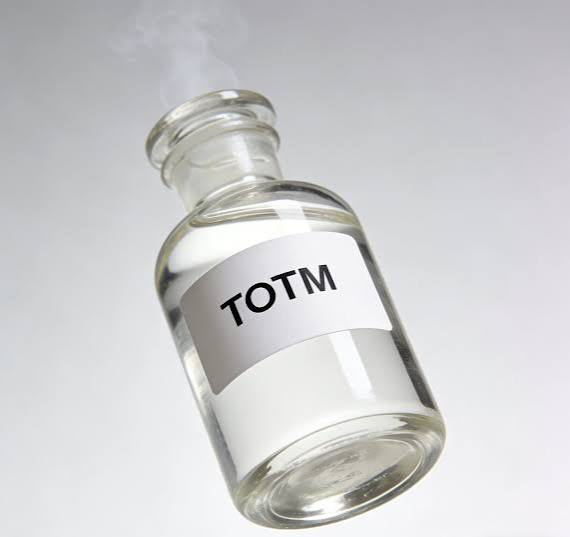
Why TOTM is Unique?
Traditional plasticizers belong to the phthalate family. TOTM belongs to a distinct class called trimellitates.
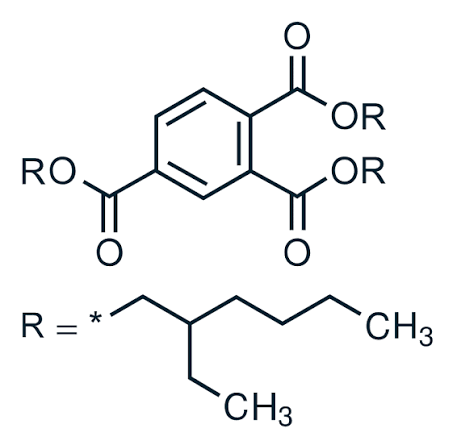
- Bulky Molecular Structure: Structurally, TOTM consists of a central benzene ring attached to three large, branched octyl side chains (compared to only two side chains in phthalates like DOP).
- High Molecular Weight: It has a hefty molecular weight of 546.8 g/mol. Because the molecules are so large and heavy, they become tightly entangled within the PVC polymer chains. This makes it incredibly difficult for the plasticizer to escape, evaporate, or migrate out of the finished plastic.
Key Properties That Make TOTM Plasticizer Stand Out
Fundamental Chemical Properties
These are the fixed molecular characteristics of the pure chemical:
- Chemical Name: Tris(2-ethylhexyl) benzene-1,2,4-tricarboxylate / Trioctyl Trimellitate
- Chemical Formula: C₃₃H₅₄O₆
- Molecular Weight: 546.8 g/mol (A heavy, bulky molecule compared to DINP at 418.6 g/mol)
- CAS Number: 3319-31-1
- Appearance: Clear, oily, viscous liquid free of suspended matter.
Physical & Commercial Specifications (TDS Standard)
When testing incoming lots of raw material at the plant laboratory, technicians verify these values to ensure the purity and quality of the batch:
| Critical Property | Typical Specification Range | Test Method Reference | Importance in Production |
|---|---|---|---|
| Pure Ester Content | ≥ 99.0% | Gas Chromatography (GC) | Ensures no unreacted alcohol or trimellitic anhydride remains to cause smoking. |
| Density (at 20°C) | 0.988 – 0.994 g/cm³ | ASTM D4052 | Used to calculate precise automated liquid dosing by volume/weight. |
| Kinematic Viscosity (at 20°C) | 200 – 300 mPa⋅s (cP) | ASTM D445 | Significantly higher viscosity than DINP (~80 cP); requires heated pumping lines in cold environments. |
| Color Scale | ≤ 40 – 50 Pt-Co / APHA | ASTM D1209 | Low color values allow the production of completely transparent medical tubes or bright white cables. |
| Acid Number | ≤ 0.05 mg KOH/g | ASTM D1045 | Excess acidity will degrade PVC thermal stabilizers, leading to yellowing or charring during processing. |
| Moisture Content | ≤ 0.05% | Karl Fischer (ASTM E203) | Moisture above 0.1% vaporizes at extrusion temperatures (~180°C), creating bubbles and structural flaws. |
| Refractive Index | 1.480 – 1.485 | ASTM D1218 | Fast optical check to instantly confirm product identity at the receiving dock. |
Primary Applications
The primary applications of TOTM (Trioctyl Trimellitate) plasticizer include:
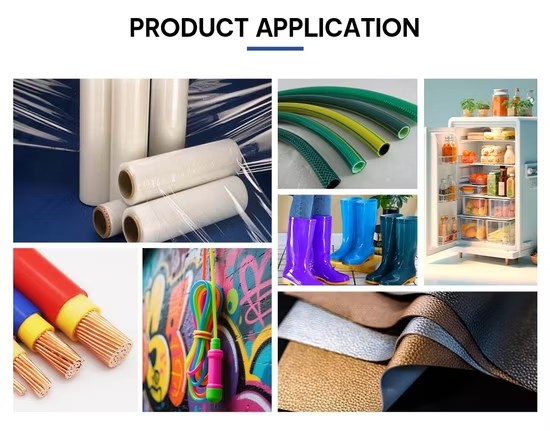
- High-Temperature Electrical Wire & Cable Insulation: Compounding flexible PVC jackets that meet international UL/CSA standards for continuous operational exposure at 90°C and 105°C (e.g., appliance internal wiring, automotive engine harnesses, data centers).
- Medical Devices & Bio-Compatible Tubing: Manufacturing blood storage bags, hemodialysis circuits, intravenous (IV) fluid tubes, enteral feeding tubes, and respiratory masks due to its non-phthalate safety and high resistance to leaching into lipid-rich or saline solutions.
- Automotive Interior Components: Producing vinyl dashboard skins, instrument panels, door trim, armrests, and synthetic leather topcoats to prevent windshield fogging under intense solar heat.
- Appliance Gaskets & Heavy-Duty Seals: Fabricating dishwasher door gaskets and washing machine seals that require maximum extraction resistance against constant hot, soapy water and chemical surfactants.
- Industrial Hoses & Fuel Line Tubing: Engineering flexible chemical transfer tubes and fuel-resistant hoses that must withstand extraction by oils, greases, hydrocarbons, and mild chemical solvents.
- Outdoor Architectural Fabrics & Tarpaulins: Formulating durable protective coatings for military gear, tents, and commercial outdoor canvas exposed to persistent UV rays and harsh weathering.
- Specialty Plastisoles & Screen-Printing Inks: Creating premium screen-printing plastisol inks and liquid vinyl wall coverings that demand long-term shelf stability and permanent post-cure flexibility.
TOTM Plasticizer vs DOTP and DEHP
The comparison between TOTM (Trioctyl Trimellitate), DOTP (Dioctyl Terephthalate), and DEHP (Diethylhexyl Phthalate, also known as DOP) represents the full spectrum of plasticizers used in the PVC industry, ranging from legacy commodities to premium specialty chemicals.
| Feature / Property | DEHP (DOP) (Ortho-phthalate) |
DOTP(Terephthalate) | TOTM(Trimellitate) |
|---|---|---|---|
| Chemical Structure | Ortho-phthalate (C8 side chains) | Terephthalate (C8 linear chains) | Trimellitate (Three C8 side chains) |
| Molecular Weight | 390.6 g/mol (Lightweight) | 390.6 g/mol (Lightweight) | 546.8 g/mol (Heavy/Bulky) |
| Regulatory Status | Banned / Highly Restricted in consumer goods globally. | Safe / Approved for general consumer use. | Safe / Approved for sensitive medical/food use. |
| Max Continuous Temp. | 60°C (Poor thermal life) | 60°C – 75°C (Standard) | 105°C (Exceptional thermal life) |
| Volatility (Heat Loss) | High (Evaporates easily) | Moderate | Ultra-Low (Locked in matrix) |
| Extraction Resistance | Poor (Leches into oils/water) | Moderate | Excellent (Resists soapy water/oils) |
| Plasticizing Efficiency | Excellent (The 1.00 benchmark) | Good (Requires ~5% more than DEHP) | Poor (Requires ~10-15% more than DEHP) |
| Relative Market Cost | Cheap (Commodity) | Economical (Standard) | Premium (Specialty Chemical) |
Is TOTM Plasticizer Safe?
Yes, TOTM (Trioctyl Trimellitate) is widely recognized as one of the safest plasticizers on the market, particularly as a non-phthalate alternative to toxic legacy plasticizers like DEHP (DOP). Because it has a massive molecular weight, its molecules stay locked inside the plastic matrix, making it incredibly resistant to leaching, evaporation, or migrating into the human body or the environment.
Frequently Asked Questions (FAQ)
What is the molecular weight of TOTM, and why does it matter?
TOTM has a high molecular weight of 546.8 g/mol. This massive, bulky structure causes the molecules to become physically entangled within the PVC polymer chains. As a result, it resists migrating, evaporating, or leaching out of the plastic matrix, giving the final product exceptional longevity.
Is TOTM a phthalate?
No. TOTM is a trimellitate, making it a non-phthalate plasticizer. It features a central benzene ring bonded to three octyl side chains rather than the two side chains found in ortho-phthalates like DEHP (DOP) or DINP.
Does TOTM comply with RoHS and REACH regulations?
Yes. TOTM complies with RoHS (Restriction of Hazardous Substances) and REACH directives. It is not listed on the REACH Substance of Very High Concern (SVHC) list, unlike toxic legacy phthalates.
What is the plasticizing efficiency of TOTM compared to DEHP (DOP)?
TOTM has a lower plasticizing efficiency due to its heavy molecular weight. Its efficiency factor is typically 1.10 to 1.15. This means if your original formula used 50 phr (parts per hundred resin) of DOP, you will need approximately 55 to 58 phr of TOTM to achieve the exact same Shore hardness/flexibility.
What are the mixing requirements for TOTM in a high-speed dry blender?
Because liquid TOTM has a high viscosity (200–300 cP at 20°C), it requires longer dry-blend mixing times and slightly higher pre-heating temperatures (85°C to 95°C) for the porous PVC resin granules to fully absorb it.
What is the processing temperature window for TOTM compounds?
TOTM compounds typically require an extrusion or molding melt temperature between 175°C and 195°C to guarantee complete gelation (fusion) and a smooth surface finish. Because its flash point is exceptionally high (≥ 245°C), it can safely withstand these temperatures without smoking or bre