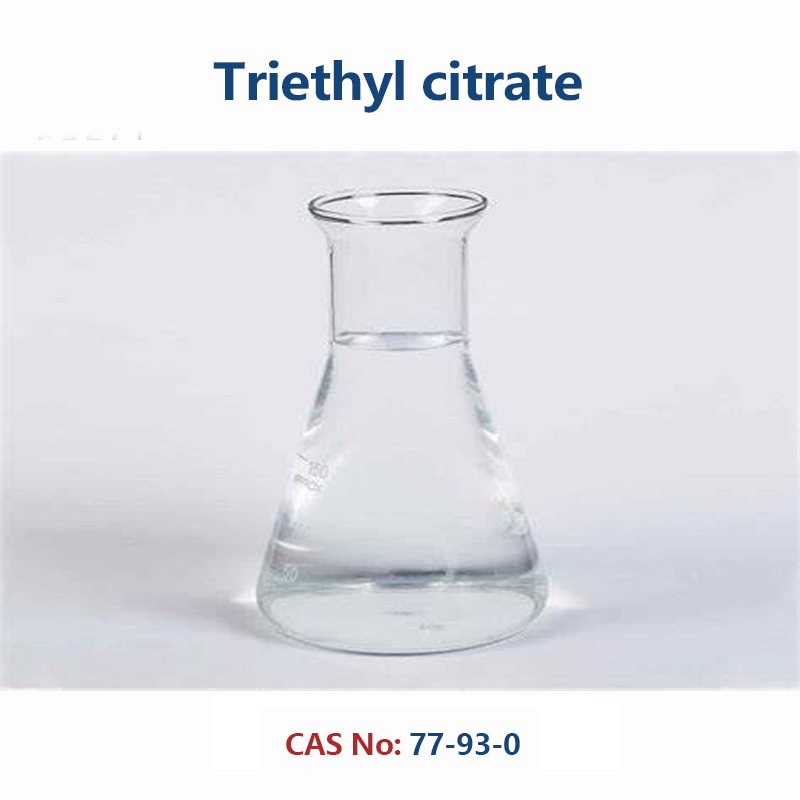
Triethyl Citrate (TEC) Plasticizer CAS NO.:77-93-0
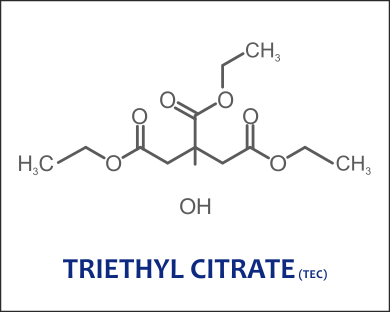
Triethyl Citrate (TEC) is a colorless, odorless, and biodegradable liquid ester produced by the esterification of plant-derived citric acid and ethanol. Recognized for its exceptionally low toxicity and highly eco-friendly profile, TEC serves as a versatile, eco-conscious chemical building block across multiple consumer and industrial supply chains.
Chemical & Physical Properties
| Property | Value / Specification |
|---|---|
| CAS Registry Number | 77-93-0 |
| Chemical Formula | C₁₂H₂₀O₇ |
| Molecular Weight | 276.29 g/mol |
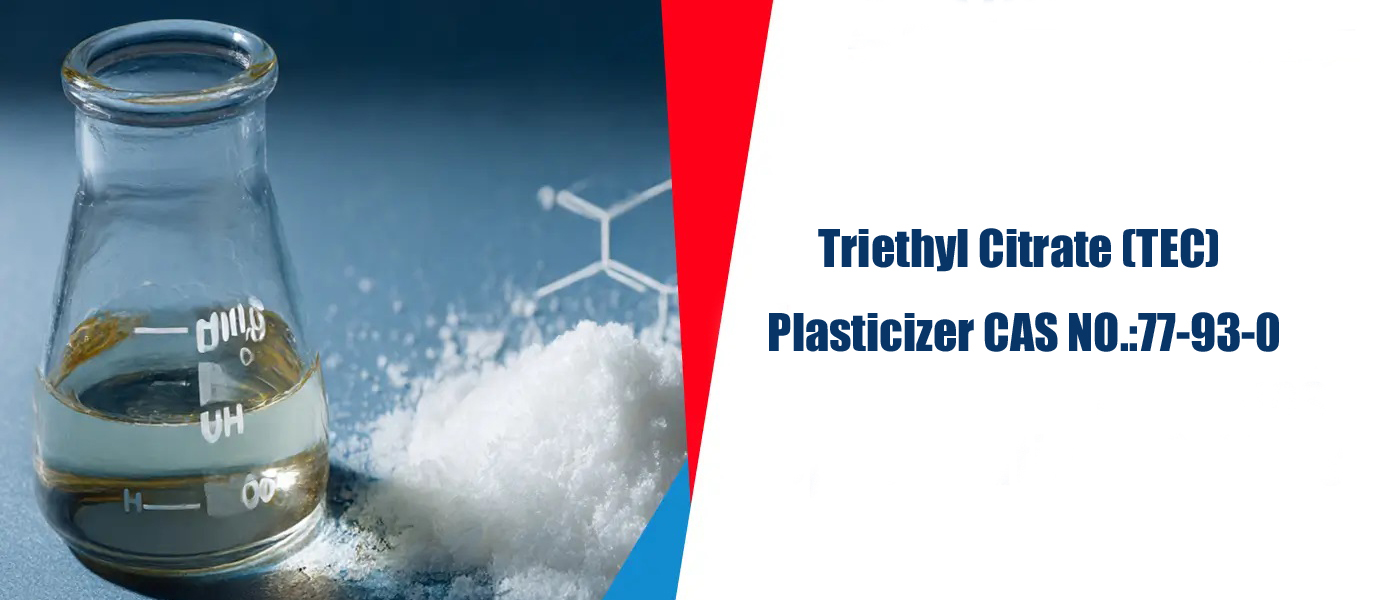
| Appearance | Clear, colorless, oily liquid |
| Boiling Point | ~294 °C (561 °F) under atmospheric pressure |
| Solubility | Finite water solubility (~65 g/L); fully miscible with organic solvents, oils, and resins |
| Regulatory Status | Generally Recognized as Safe (GRAS), approved FDA food additive, COSMOS-validated for natural cosmetics |
Primary Industry Applications
Cosmetics & Personal Care:
Deodorant Active: Acts as an enzymatic inhibitor. It prevents skin bacteria from breaking down sweat components into malodorous fatty acids without disrupting natural skin flora.
Fragrance Fixative: Serves as a low-volatility carrier solvent and fixative in fine perfumes, ensuring consistent scent dispersion and slowing down the evaporation of top notes.
Film Former: Plasticizes polymers in hair sprays and nail polishes to prevent cracking and improve flexibility.

Pharmaceutical Formulations:
Film Coatings: Extensively used as a safe plasticizer for enteric and sustained-release tablet and capsule coatings (such as Eudragit polymers) to control structural degradation rates and mask bitter tastes.

Food & Beverage Production (E1505):
Whipping Aid: Added to commercial egg whites to stabilize foam matrices during high-speed industrial processing.
Flavor Carrier: Functions as a non-toxic carrier solvent for oil-soluble flavors in acidic beverages and citrus blends.
Eco-Friendly Bioplastics & Polymers:
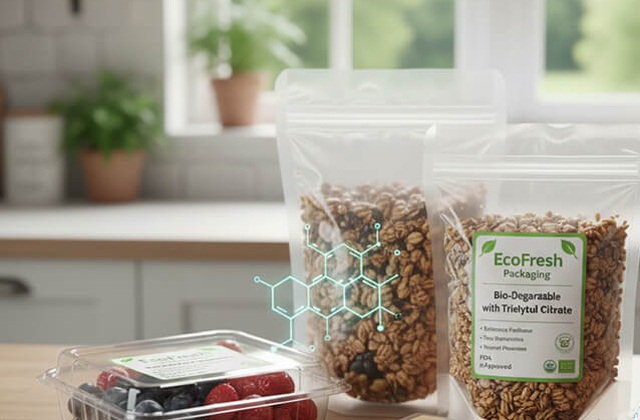
Phthalate Alternative: Replaces toxic phthalate plasticizers (like DEHP or DBP) in polyvinyl chloride (PVC), cellulose acetate, and polylactic acid (PLA) polymers. It is vital for child-safe toys, medical tubing, and compostable food packaging.
Key Performance & Properties of High Quality Triethyl Citrate Plasticizer
High-quality Triethyl Citrate (TEC) is a premier eco-friendly, phthalate-free primary plasticizer known for its unique combination of high purity, low toxicity, and exceptional compatibility with polar polymers. Derived entirely from bio-based resources (citric acid and ethanol), high-purity TEC serves as a functional benchmark in applications where strict regulatory compliance and precise mechanical performance are required—such as pharmaceutical coatings, food packaging, bioplastics, and medical devices.
The key performance characteristics and material properties that define high-quality TEC include:
1. Thermal & Molecular Plasticization Efficiency
High-quality TEC operates under the “free volume theory” of polymer mechanics, seamlessly embedding its small molecular footprint between rigid polymer structures to disrupt intermolecular bonds:
- Glass Transition Temperature Tg Reduction: High-quality TEC effectively drops the Tg of brittle polymers (like Polylactic Acid (PLA), Cellulose Acetate (CA), and PVC), preventing thermal degradation during processing.
- Melt Flow Enhancement: In extrusion and 3D printing applications, TEC significantly reduces melt viscosity and optimizes the Melt Flow Index (MFI), allowing for smooth, defect-free polymer processing at lower, safer extrusion temperatures.
2. Mechanical Performance & Film Flexibility
In coating matrices and film casting, high-grade TEC functions as a specialized structural modifier:
- Elongation at Break: The introduction of pure TEC induces high-performance ductility, resulting in soft, highly flexible films with dramatically elevated percentage elongation profiles.
- Balanced Tensile Properties: It purposefully reduces a polymer film’s elastic modulus and tensile strength, giving coatings (such as enteric coatings on oral solid dosages) the perfect elasticity required to resist cracking, chipping, or peeling during handling.
3. Resin Compatibility & Polymer Solubility
A core signature of high-quality TEC is its broad polarity and amphiphilic interaction spectrum:
- High Solubility Parameter: Thanks to its balanced ester network, it shows excellent miscibility with organic solvents and exhibits vast polymer compatibility. It mixes cleanly into cellulose derivatives, polyvinyl chloride (PVC), vinyl resins, acrylics, and chlorinated rubber.
- Homogeneous Blends: High-purity lots ensure complete dispersion without Phase Separation, preventing common material defects like “sweating” or surface blooming over a product’s shelf life.
4. Environmental Resistance & Chemical Stability
Premium-grade TEC offers distinct advantages over standard industrial or poorly processed citrates:
- Oil & Mildew Resistance: Polymers plasticized with high-quality TEC show strong resilience against hydrocarbons, fats, and moisture, maintaining structural soundness under damp conditions.
- Controlled Leaching Dynamics: Modulated DSC studies demonstrate that high-quality TEC displays a highly stable, concentration-dependent, and predictable low leaching rate, ensuring the long-term structural integrity of the final host compound.
5. Regulatory, Sensory & Purity Standards
The defining differentiator of premium-tier TEC lies in its chemical cleanliness and safe usage profiles:
- Odorless and Colorless Profiles: Free from residual reaction contaminants, quality TEC features a completely clear visual profile and zero chemical odor, preventing flavor or aroma distortion in food packaging, cosmetics, and medications.
- Global Green Validation: It carries comprehensive non-toxic credentials, including global FDA food contact permissions (E1505 approval), compliance with USP/NF pharma monographs, and COSMOS validation for green cosmetics.
Direct Comparison: TEC vs. Traditional Plasticizers
| Advantage Metric | Triethyl Citrate (TEC) | Phthalates (e.g., DEHP / DOP) | Adipates (e.g., DOA) |
|---|---|---|---|
| Source Material | 100% Bio-based (Corn/Sugar) | Petrochemical | Petrochemical |
| Toxicity Profile | Non-toxic, non-irritating | Endocrine disruptor / Restricted | Low-to-moderate toxicity |
| Biodegradability | High and rapid | Low and persistent | Moderate |
| Pharma/Food Approval | Widely approved (USP/NF, E1505) | Heavily banned or restricted | Limited specific approvals |
| Primary Limitation | Higher volatility at extreme heat | Prone to environmental leaching | Poor compatibility with cellulose |
FAQ
What exactly is Triethyl Citrate (TEC)?
Triethyl Citrate is a bio-based, non-toxic liquid ester formed by the esterification of plant-derived citric acid and ethanol. It is globally recognized as a premier eco-friendly alternative to traditional, petrochemical-based phthalate plasticizers.
How does TEC work as a plasticizer?
TEC operates via the free volume theory. Its small, polar molecular structure embeds itself between rigid, tightly packed polymer chains. By neutralizing intermolecular forces (like hydrogen bonding or dipole interactions), it increases chain mobility. This lowers the material’s glass transition temperature (\(T_{g}\)), resulting in increased flexibility, softness, and ductility.
Which polymers are compatible with TEC?
TEC is highly polar, making it remarkably miscible with a broad spectrum of polar resins and bioplastics:
- Cellulose Derivatives: Cellulose Acetate (CA), Cellulose Acetate Butyrate (CAB), and Nitrocellulose.
- Bioplastics: Polylactic Acid (PLA) and Polyhydroxyalkanoates (PHA).
- Vinyls & Acrylics: Polyvinyl Chloride (PVC), polyvinyl acetate (PVA), and various polymethacrylate pharmaceutical coatings (e.g., Eudragit).
- Rubbers: Polychloroprene and chlorinated rubber.
What mechanical improvements does TEC bring to a formulation?
- Elevated Elongation: Drastically increases the “elongation at break” percentage, preventing brittle cracking.
- Lower Melt Viscosity: Functions as an internal lubricant during processing, lowering the Melt Flow Index (MFI) and allowing extrusion or molding at lower temperatures to save energy and protect heat-sensitive resins.
- Anti-Chipping / Peel Resistance: In ultra-thin film configurations (like tablet coatings or nail polishes), it provides the elasticity required to resist external impact without peeling.
What are the limitations or trade-offs of using TEC?
- Volatility at High Temperatures: Because TEC has a lower molecular weight than heavy phthalates, it can exhibit higher volatility at extreme processing temperatures (exceeding 200°C–250°C), which may cause minor outgassing or migration under high heat.
- Water Sensitivity: It features finite water solubility (~65 g/L). In environments with prolonged water exposure, it can slowly leach out compared to fully hydrophobic hydrocarbon plasticizers.
Is TEC safer than phthalate plasticizers?
Yes, significantly. Traditional phthalates (like DEHP, DBP, and BBP) are classified as endocrine disruptors and face heavy global bans in consumer items. TEC is completely non-toxic, non-carcinogenic, and non-mutagenic. If ingested or absorbed, the human body safely metabolizes TEC into citric acid and ethanol via normal metabolic pathways.
Is Triethyl Citrate environmentally friendly?
Yes. It is 100% bio-based when sourced from fermented agricultural sugars (like corn or sugarcane). Furthermore, it is fully biodegradable, breaking down rapidly into harmless natural compounds without causing eco-toxicity in waterways or soil.
What are the proper storage conditions for TEC?
TEC should be stored in its original, tightly sealed containers (typically steel drums or HDPE totes) in a cool, dry, and well-ventilated warehouse. Because it is an ester, keep it away from strong acids, strong bases, and intense oxidizing agents to prevent premature hydrolysis. Under proper conditions, it maintains a shelf life of 24 to 36 months.