DOTP Plasticizer Guide: Dioctyl Terephthalate Technical
High-purity industrial Dioctyl Terephthalate (DOTP) must satisfy stringent chemical and physical criteria to ensure predictable behavior during PVC compounding:
| Technical Parameter | Standard Value Range | Test Method Reference | Industrial Relevance |
|---|---|---|---|
| Ester Content (GC) | ≥ 99.5% | ASTM D3465 | Minimizes volatile low-molecular-weight byproducts. |
| Color (APHA / Hazen) | ≤ 25 – 30 | ASTM D1209 | Ensures high transparency in crystal-clear PVC films. |
| Acid Value | ≤ 0.02 – 0.05 mg KOH/g | ASTM D1045 | Prevents compound degradation and equipment corrosion. |
| Water Content | ≤ 0.05% – 0.10 wt% | ASTM E203 (Karl Fischer) | Eliminates moisture-induced surface defects during extrusion. |
| Density (20°C) | 0.981 – 0.985 g/cm³ | ASTM D4052 | Standard volumetric metrics for compounding lines. |
| Dynamic Viscosity (25°C) | 60 – 65 cP | ASTM D445 | Governs initial pourability and wetting of PVC dry blends. |
| Volume Resistivity | ≥ 5.0 × 10¹¹ Ω⋅cm | IEC 60093 / ASTM D257 | Vital benchmark for flexible high-voltage wire/cable jackets. |
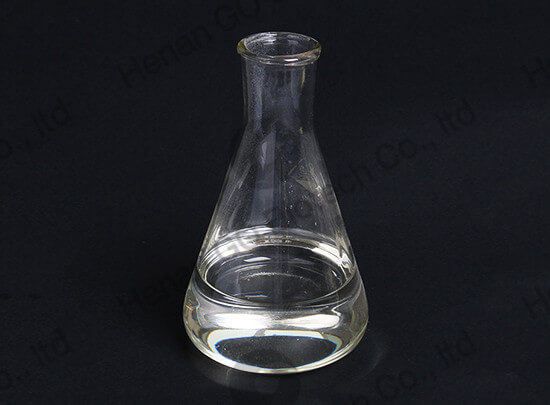
Technical Trade-offs: DOTP vs. Legacy Plasticizers
Selecting DOTP over traditional ortho-phthalates like DOP (DEHP) or DINP involves weighing its molecular structure against processing efficiency:
| Property Performance | DOTP (Terephthalate) | DOP / DINP (Ortho-Phthalates) | Formulation Engineering Impact |
|---|---|---|---|
| Plasticizing Efficiency | Lower (~3–5% higher loading needed) | Higher (Benchmark standard) | DOTP requires slightly more parts per hundred resin (phr) to achieve identical Shore A hardness. |
| Volatility & Heat Stability | Superior | Inferior | The linear para-ester structure of DOTP gives it a higher boiling point (400°C), slowing down aging under heat. |
| Migration Resistance | Excellent (Low extraction) | Moderate | Resists leaching into oily, soapy, or aqueous environments, which is essential for medical products. |
| Dry Blend Fusion/Gelation | Slower (Requires +5 to 10°C) | Faster (Lower gelation temp) | Demands minor line-speed or temperature adjustments during compounding. |
| Toxicological Safety Profile | Non-toxic / Phthalate-free | Regulated / Restricted | Exempt from extensive bans, making it ideal for toys and medical devices. |
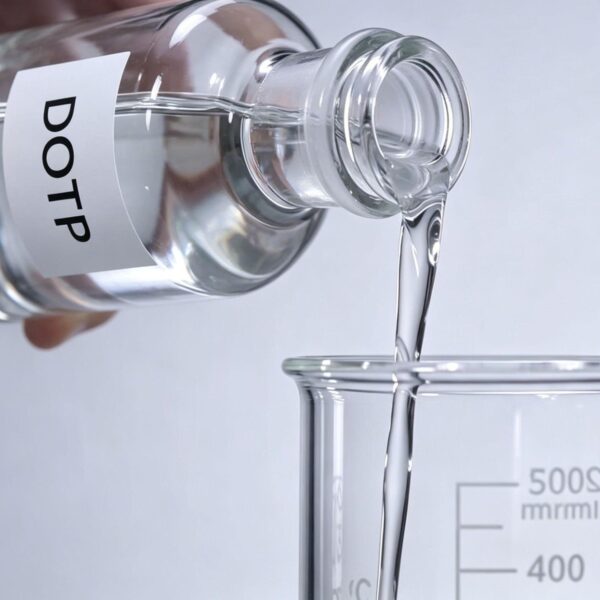
Process Engineering Matrix: Batch vs. Continuous Synthesis
Industrial production of DOTP through direct esterification utilizes one of two plant designs:
1. Multi-Stage Continuous Esterification
- Mechanics: Raw materials (PTA and 2-EH) pass through a cascade of 4 to 6 series-connected reactors while temperatures are progressively raised (190°C → 240°C).
- The Yield: Delivers massive, uniform product runs with a constant output profile.
- Operational Trade-off: Requires a steep initial capital investment (CAPEX) for automated inline blending and multi-stage vacuum fractioning towers. It is best suited for regional production hubs targeting volumes exceeding 50,000 metric tons per year.
2. Flexible Batch Reactor Loop
- Mechanics: Processes distinct, timed batches in a single large-volume reaction kettle equipped with a dedicated overhead cooling reflux system.
- The Yield: Cycle times range from 10 to 12 hours per batch.
- Operational Trade-off: Offers exceptional raw-material flexibility—allowing operators to switch from virgin PTA powder to recycled PET flake feedstocks without significant modifications to the equipment. However, batch-to-batch variations require careful testing of acid values and color before filtration.
Formulating and Blending Insights for Manufacturers
To get the most out of DOTP in automated compounding lines, process engineers should adopt specific operational guidelines:
- Compounding Temperature Adjustment: Because DOTP has a higher fusion temperature than DOP, raise the heat profiles on your extruder zones or high-speed mixers by 5°C to 10°C. This modification guarantees complete gelation of the PVC matrix and prevents un-plasticized fish-eyes in extruded sheets or profiles.
- Optimizing Electrical Insulation: For high-spec automotive and appliance wiring (105°C wire ratings), wash water and alkaline residues must be completely stripped out during manufacturing. Even tiny amounts of residual salts can drop volume resistivity values below compliance limits.
- Stabilizer Synergies: Pair DOTP with high-quality Liquid Calcium-Zinc (Ca-Zn) or Barium-Zinc (Ba-Zn) heat stabilizers. This combination prevents the degradation of ester groups during high-temperature processing, keeping the plastic clear and preventing premature yellowing.
Mechanism of Action of DOTP as PVC Plasticizer
DOTP (Dioctyl Terephthalate) works by integrating into the PVC matrix and separating the polymer chains, which reduces the glass transition temperature (Tg) and imparts flexibility. This process occurs in four key steps:
- Compatibility and Mixing: During high-temperature processing (150-180 °C), the polar ester groups of DOTP are attracted to the chlorine atoms on PVC chains via dipole-dipole interactions. This allows DOTP to uniformly penetrate and form a homogeneous mixture with the PVC.
- Chain Separation and Shielding: The bulky, non-polar alkyl chains of DOTP physically force the PVC polymer chains apart. This separation increases the free volume between chains and shields the natural dipole-dipole interactions (“secondary crosslinks”) that make rigid PVC hard.
- Enhanced Mobility and Reduced Tg: By separating and shielding the chains, DOTP acts as a molecular lubricant. This enables PVC chains to move past each other easily, drastically lowering the material’s Glass Transition Temperature (Tg). As the Tg falls below room temperature, the PVC becomes flexible.
- Formation of a Stable Network: Upon cooling, the DOTP molecules are permanently immobilized within the PVC matrix. Held in place by polar interactions, their alkyl chains maintain polymer separation, resulting in a permanently flexible material.
Why DOTP is Superior to Traditional Phthalates
- Lower Volatility & Migration: The symmetric para-terephthalate structure and higher molecular weight lead to stronger van der Waals forces between DOTP molecules themselves and with PVC chains, making it harder for them to leach out or evaporate.
- Better Low-Temperature Performance: The branched alkyl chains effectively prevent the PVC chains from packing together closely, maintaining chain mobility even at low temperatures and preventing the material from becoming brittle.
- Superior Electrical Insulation: The symmetrical structure and larger molecular size result in lower dipole